It’s saturday and another long day waiting for the new episode ahead, so I figured I’d kill some time and talk about why this show has gotten so incredibly popular in such a short time. I’ve been watching anime for years and actively followed several series, but so far nothing in my experience matches the mindblowing speed fans have taken Tiger&Bunny as their own.
Recently Viz Media was announced as a licencer of Tiger&Bunny merchandise in North America, and fangirls scoffed at their choice of demographic: male, 14-25 age group. (I was one of them, I admit.) But if I think about it a bit more carefully, their choice of demographic is accurate. That is the correct viewer segment if you just look at what the series is on the surface. There are superheroes, action, very typical shonen elements that will appeal to the young adult male audience. In Japan, the series was aimed at a slightly older audience, but still predominantly for males. Hiroaki Hirata, the VA for Kotetsu, mentioned in an interview that his character was designed to appeal to males around 40.
 When you are making a product to sell, one of the first questions you have to answer is “who do I want to get to buy this?” and this applies to making anime, too. This decision will affect things like what kind of merchandise you want to licence, where you’ll advertise, and how you’ll design the appearance of your product. Looking at the earliest merchandise that was announced for the series, there are T-shirts and figures, both things that are easy to sell to a male audience. Same trend goes for product placement that is a big part of the series concept. (I’ll get into the whole product placement thing another time so this post doesn’t get out of hand. I’m a marketing major so I could talk about this all day.)
Okay, so I’ve established what the original intended demographic for the series was. Though the cast being predominantly bishounen-type male characters does contribute to making Tiger&Bunny popular among the female audience, that’s not the real reason. Characters that please the eye of female viewers helped to get their attention, but it doesn’t explain the incredible popularity that is still growing if places like Pixiv are used to measure it. (Current count of fanworks on the Tiger&Bunny Pixiv tag: 34,574 art and 6,425 stories.) Recent viewer statistics from the Tiger&Bunny Ustream channel show a constant steady growth in watchers without a sign of decline yet.
 I think that the reason for Tiger&Bunny’s unexpected popularity among the female audience is simple yet something that’s easily overlooked: excellent writing and characterization. Tiger&Bunny isn’t just a shonen action show, it’s an incredibly well written relationship drama about the two main protagonists, Kotetsu and Barnaby. Watching and watching again, it’s obvious how carefully planned the development of their partnership is. Everything has a logical reason, a cause and effect, and it makes sense. When I saw episode 12, at first I felt that the way Kotetsu acted was out of character considering how much consideration he’d shown to Barnaby so far. Then I rewatched episode 7 and understood why he did what he did. The surface may have perked the interest of female audience, but it’s what you see under the hood that has the biggest appeal for them and keeps drawing them in.
 Even the character Kotetsu, who was aimed at older male audience has been incredibly well received by the female fans. He won the recent BIGLOBE popularity poll with a huge lead to other characters. He is everything a typical shonen anime hero isn’t: he’s middle-aged (his official age hasn’t been revealed yet but fans are guessing him to be somewhere in the 35-40 range), a single parent, and a kind of a failure. All this doesn’t sound very appealing, but his characterization, disposition and dynamic with Barnaby have made him much much more than what the sum of his basic design was. (I’m hoping we’ll get that rumored Sky High episode soon, I really want to write about why he is so popular, too, after he scored third place in that poll. It’s hard when we know so little about him.)
I think that Tiger&Bunny would be an enjoyable series just as a typical shonen show, but I doubt I would be rewatching the episodes for the 5th time if it was just that. For me, the appeal is in the characters, their dynamics and discovering the amount of detail that has been put into the design of every scene. The entire series kind of resembles its protagonist Kotetsu – sum it all up and you end up with more than you thought you would. The positive response has surprised even the series creators.
We seem to be reaching some sort of culmination point in the series this week as Tiger&Bunny passes its halfway mark. Hopefully the writing will be just as excellent on the second half and keep me glued to the screen all the way to the end.
(I would like to point out that I am fujoshi, I like my doujinshi and fanfiction etc. but I wanted to explain this without using the word “gay” in the article just because it could be done.)
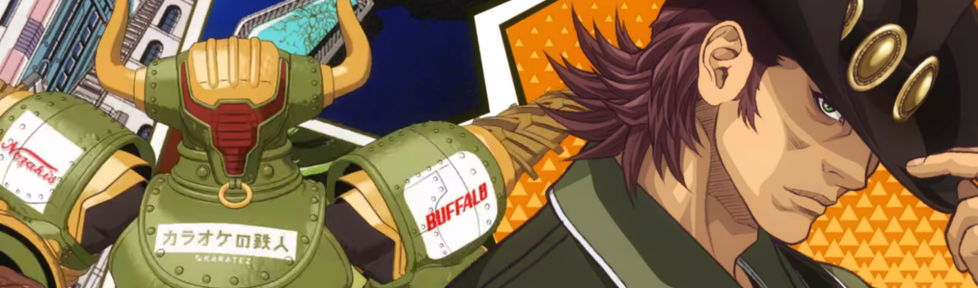
 Like I mentioned in the episode 14 post, new opening and ending songs premiered. They’re similar in style as the first set of songs and both are performed by new artists. This is also going to be the post where I finally throw my hands in the air in resignation. It was a personal challenge for me to not let my fujoshi show and not talk about all the gay





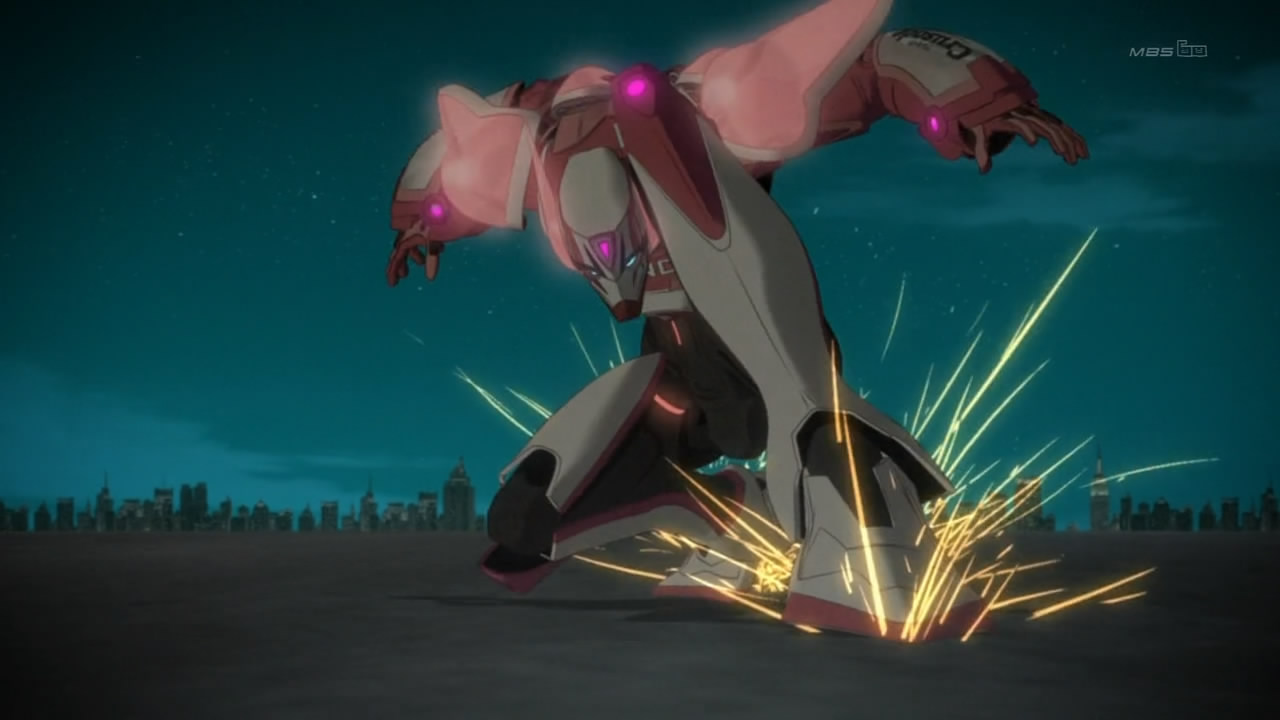


 Moving on, the second most obvious thing about Nathan is that he is gay. The view on homosexuality in Japan is different from the Western view, though it’s common for people to hide their sexuality if it differs from the norm. I’m not gonna go deeper into that issue right now, it’d turn out way tl;dr (and Aki’s reading a book about homosexuality in Japan throughout the history so it’s more her field). So called “okama characters” (men who dress up as women) aren’t uncommon in Japanese media. If I think of the American view, homosexuality is less accepted among the blacks but this has more to do with religion than anything else. Again, Nathan doesn’t fit the usual mold.
 Fire Emblem: He’s a cute kid. He’s the perfect new hero. He’s got a pretty face, so he’s got to be popular with the ladies too. Especially with the ladies…
 But back to superheroes. If you have been paying attention, you’ve noticed that this guy is pretty damn BADASS. He can stop bullets with his fire. He can melt steel with his fire. Even his cape is on fire. (Stare at the cape for a while, it’s hypnotic like live fire.) He’s confident, and I think the only time he’s been truly taken by surprise was in episode 6 when his fire was overpowered. He’s also smart, and emotionally intelligent, which makes him possibly the best judge of character among all the heroes. Lately he seems to enjoy especially watching Kotetsu and Barnaby. It’s not hard to notice Kotetsu’s bluffs, but he seems to be the most tuned in to what goes on between those two. All the characters get their share of being a comedy relief, but the show makes very little fun of Nathan as a gay man – the joke’s more on others and Antonio seems to have ended as a butt of many of them. (“Your butt always feels nice.”)
 This is Sternbild